Shred Science: Getting American Cabbage to Stack Right for Hiroshima Okonomiyaki
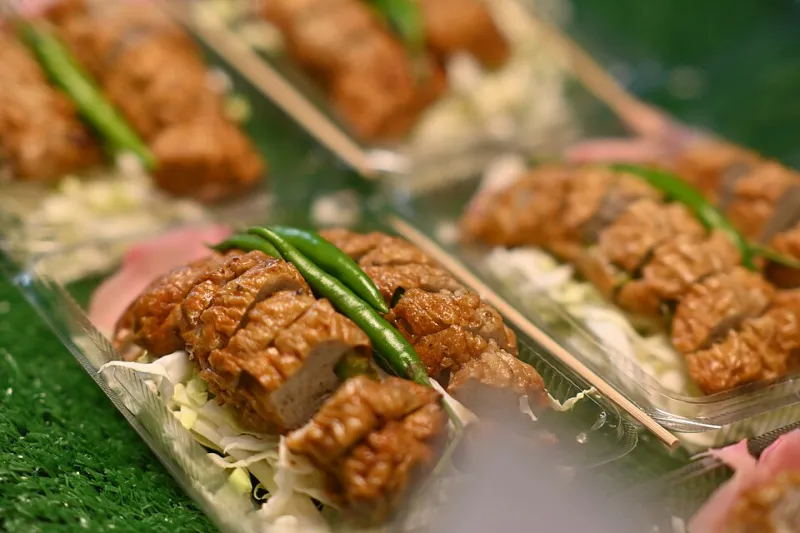
Photo: Pattaya Patrol, CC BY-SA 4.0, via Wikimedia Commons
Hiroshima-style okonomiyaki looks simple enough: a thin crepe, a heap of cabbage, noodles, pork, egg. But anyone who has tried to build one in a American kitchen knows the truth. The cabbage is the whole ballgame. And the cabbage you buy at the supermarket here is not the cabbage a Hiroshima cook reaches for.
That's not a knock on US produce. It's just a different crop, bred for different jobs. American green cabbage is built for slaw, kraut, and long storage—tight heads, thick leaves, plenty of water. Japanese cabbage destined for okonomiyaki tends to be looser, sweeter, with thinner leaves that wilt and steam into a tender layer instead of turning into a soggy mess. If you've ever watched your beautiful stack turn into a wet pile on the griddle, you've met the difference firsthand.
The good news: you don't need a specialty market or a import connection. You need a sharper knife, a lighter hand with salt, and a willingness to test what's actually in your fridge. Here's how to make American cabbage behave.
The Three Cabbages You'll Actually Find
Most US supermarkets carry three cabbages that matter for okonomiyaki: standard green cabbage, savoy, and napa. Red cabbage exists, but it's a different texture and color story—skip it for this.
Green cabbage is the default. It's dense, crisp, and watery. Shredded too thick, it stays raw in the middle of the stack. Shredded too fine, it releases a flood of water and turns mushy. The sweet spot is thin but not wispy—about 1.5 millimeters, or roughly the thickness of a credit card. Think of it as a fine chiffonade, not a food-processor blitz.
Savoy cabbage is the closest thing to Japanese okonomiyaki cabbage you'll find without a trip to a Asian grocery. Its leaves are crinkly and thinner, and it wilts faster under heat. It's also sweeter. If you can find it, use it—or blend it half-and-half with green cabbage for structure and tenderness at once.
Napa cabbage is a wildcard. It's watery and soft, and it will collapse if you treat it like green cabbage. But a handful of napa mixed in—maybe 20 percent of the total—adds a nice silkiness and sweetness. Just don't make it the whole pile.
The Cut Test: Knife, Mandoline, Food Processor
I tested all three methods with a standard supermarket green cabbage, and the results were not subtle.
Food processor (slicing disc): Fast, but uneven. You get a mix of paper-thin shards and thick chunks. The thin bits dissolve; the thick bits stay crunchy. Not ideal for a stack that needs to cook evenly.
Mandoline (1.5mm setting): Consistent, fast, and my recommendation if you have one. The uniform ribbons steam at the same rate, so the cabbage layer cooks through without any raw pockets. Use the hand guard—cabbage is slippery.
Chef's knife: Slower, but totally workable. Cut the head into quarters, core it, then slice crosswise as thinly as you can. The key is to keep the slices tight and even. A sharp knife helps more than any gadget here.
The takeaway: consistency matters more than the tool. Aim for ribbons, not shreds. If you can read a newspaper through a piece, it's too thin. If it looks like coleslaw, it's too thick.
Salt: A Little, Early, and Then Let It Go
This is where American cabbage really diverges from Japanese cabbage. US green cabbage holds more water, and that water wants to end up on your griddle. The fix is a light pre-salt.
Toss your shredded cabbage with about a quarter-teaspoon of kosher salt per packed cup. Let it sit in a colander for 10 to 15 minutes. You'll see beads of water form on the leaves. Squeeze gently—not hard—with your hands or a clean towel. You're not trying to wring it dry like sauerkraut. You're just taking the edge off.
Why not skip the salt? Because unsalted American cabbage releases its water during cooking, right when the crepe is trying to set. That's how you get a soggy bottom and a stack that slides apart. A brief salt rest gives the water somewhere to go before the griddle gets involved.
One caution: don't salt too early. More than 20 minutes and the cabbage starts to soften and lose its snap. Salt it while the griddle preheats, squeeze it, and use it right away.
Adjusting the Batter and the Heat
Even with salted cabbage, American cabbage needs a slightly different approach than the Japanese original. Two adjustments help.
First, tighten the batter. Hiroshima okonomiyaki batter is thin—flour, water, a little dashi, maybe yamaimo. But if your cabbage is wet, a thin batter makes the whole thing soupy. Add a tablespoon of cornstarch or potato starch per cup of flour, or use a bit less water. The batter should coat the cabbage lightly, not drown it.
Second, cook lower and longer. American cabbage benefits from a gentler griddle. Medium-low heat gives the water time to evaporate and the leaves time to tenderize without scorching the crepe. Cover the stack with a lid for the first few minutes—trapping steam helps the cabbage wilt—then uncover to crisp the edges. Press gently with a spatula, but don't smash. You want structure.
The Fix-It Checklist
Before you build your next stack, run through this:
- Shred to 1.5mm ribbons, not coleslaw chunks.
- Mix green cabbage with savoy or a little napa if you can.
- Salt lightly, rest 10–15 minutes, squeeze gently.
- Add a spoonful of starch to the batter if the cabbage feels wet.
- Cook on medium-low, lid on for the first few minutes, then crisp uncovered.
None of this requires a trip to a Japanese grocery store or a special order. It's just a matter of paying attention to what American cabbage does and meeting it where it is. The result is a stack that holds together, crisps at the edges, and tastes like Hiroshima—even if the cabbage grew up a few thousand miles away.