Little Bowls, Big Difference: A Tune-It-Yourself Sauce Bar for Hiroshima Okonomiyaki
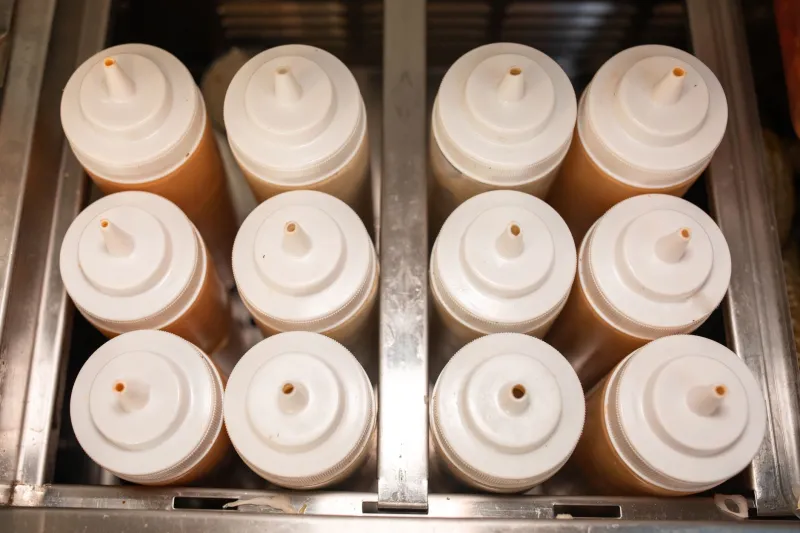
Okonomiyaki sauce is often treated like a single condiment: one bottle, one drizzle, done. In Hiroshima, sauce is less a finishing product than a tuning knob. The stack is built from noodles, cabbage, pork, egg, and batter, but the sauce decides whether the whole plate tastes bright, deep, sweet, or sharp. For a US kitchen, the easiest way to get that flexibility is not to hunt down one perfect bottle. It is to set out a small sauce bar and let the stack meet several versions at once.
This is not another guide to layering the pancake. It is a guide to the little bowls beside it.
Why one bottle is not enough
A bottled okonomiyaki sauce is a compromise. It has to be thick enough to cling, sweet enough to appeal, and acidic enough to cut cabbage. That makes it useful, but it also makes it a little predictable. Hiroshima-style okonomiyaki already has a lot going on: a thin crepe, a pile of cabbage, a layer of noodles, pork, and often an egg. If the sauce is too sweet, the cabbage disappears. If it is too sharp, it bullies the noodles. If it is too thick, it sits on top instead of working into the layers.
A sauce bar solves that by separating the jobs. You keep one dependable base, then add small accents that let eaters adjust their own plate. Think of it as a condiment pantry, not a craft project. Three or four little bowls are enough.
The bottles worth knowing in a US supermarket
You do not need a specialty Japanese market to start. Many larger US supermarkets, Asian groceries, and online retailers carry a few useful bottles. They are not interchangeable, but that is the point.
| Bottle | What it brings | Where it fits |
|---|---|---|
| Okonomiyaki sauce, such as Otafuku or another Japanese brand | Thick, glossy, sweet-tart, with fruit and date notes | The classic drizzle; use it as your anchor |
| Yakisoba sauce | Thinner, tangier, more Worcestershire-forward | Noodles, cabbage, and eaters who want less sweetness |
| Tonkatsu sauce | Sweeter and rounder, usually less acidic | A beginner-friendly option for pork-heavy stacks |
| Worcestershire sauce | Sharp, savory, thin | A few drops to wake up a flat sauce |
Otafuku is the name many American cooks will see first, and it is a solid starting point. But do not overlook yakisoba sauce. It is often a better match for the noodle layer than a thick okonomiyaki sauce, and it gives the sauce bar a needed edge. Tonkatsu sauce is not the same thing, but it is widely available and works when you want a sweeter, less tangy profile.
A pantry base you can tune
The anchor of the bar can be homemade. This is not a traditional recipe passed down from a Hiroshima griddle; it is a flexible American pantry version that gets you close and leaves room to adjust.
In a small saucepan, combine:
- 1/2 cup ketchup
- 3 tablespoons Worcestershire sauce
- 1 tablespoon oyster sauce
- 1 tablespoon soy sauce
- 1 tablespoon sugar
- 1 teaspoon molasses
- 1 tablespoon apple cider vinegar
- 1/4 teaspoon garlic powder
- 1/4 teaspoon ground ginger
Simmer over low heat for 3 to 5 minutes, stirring, until the sugar dissolves and the sauce thickens slightly. Cool it before serving. It will keep in a jar in the refrigerator for about two weeks. The texture should be pourable but not watery; if it is too thick, add a teaspoon of water. If it is too thin, let it simmer a little longer.
This base is sweet, savory, and tangy, but it is deliberately middle-of-the-road. That makes it a good canvas.
Three dials to turn
Set out the base in one small bowl, then build two or three variations beside it. Label them if you are feeding a crowd; otherwise, just remember which is which.
Oyster-sauce depth. Stir a teaspoon of oyster sauce into a half-cup of the base, or add a few drops of fish sauce if that is what you have. This version is savory and rounded, and it is especially good with extra cabbage and pork. Do not overdo it. Oyster sauce should deepen the sauce, not turn it into a seafood dip.
Fruit-forward sweetness. Add a tablespoon of apple butter, peach preserves, or grated apple to a half-cup of base, then simmer for a minute or two. The fruit should soften the acid without making the sauce taste like jam. This is the version for eaters who find okonomiyaki sauce too sharp, and it works well with a stack that includes a fried egg.
Extra tang. Stir in a teaspoon of rice vinegar or a little more Worcestershire sauce. Finish with a squeeze of lemon at the table if you want a fresher edge. This is the sauce for cutting through rich pork and for anyone who likes their okonomiyaki to taste lively rather than sweet.
A fourth bowl is optional: chili crisp, rayu, or a simple mix of soy sauce and vinegar. Keep it small. The goal is adjustment, not a condiment buffet.
How to run the bar without drowning the stack
The mistake with a sauce bar is using too much of everything. Okonomiyaki is not a sauce delivery system. Put a small spoon in each bowl and let people add a little at a time. Start with the base, then offer the variations on the side of the plate rather than pouring them all over the top.
At the table, the bar can also serve yakisoba, fried eggs, roasted cabbage, or grilled pork. That is the practical American advantage: the same little bowls earn their space beyond one dinner. A sauce bar is not a performance. It is a way to keep the stack in balance and let each eater find the version they like.
If you are cooking for yourself, make two variations, not five. A half-cup of base, one spoon of oyster sauce in a tiny bowl, and one spoon of fruit preserves is enough. The point is not to replicate a restaurant sauce station. It is to remember that Hiroshima-style okonomiyaki has always been a flexible griddle food, and the sauce should be flexible too.