Hot Plate, Cold Drinks: A Host's Guide to Hiroshima Okonomiyaki Night
Okonomiyaki night is not a cooking class. It is a small, cheerful assembly line with drinks. If you are hosting American friends who have heard about Hiroshima-style okonomiyaki but have never eaten it, the goal is not to show off. The goal is to get everyone around a hot griddle, hand them a spatula, and keep the layering moving. Hiroshima style is built in stages: a thin crepe-like batter base, a mountain of cabbage, bean sprouts, thin pork, noodles, and an egg. That structure is exactly what makes it party-friendly. Each person can build a version they like, and the host can steer the timing without turning dinner into a solo performance.
Set up the room like a short-order counter
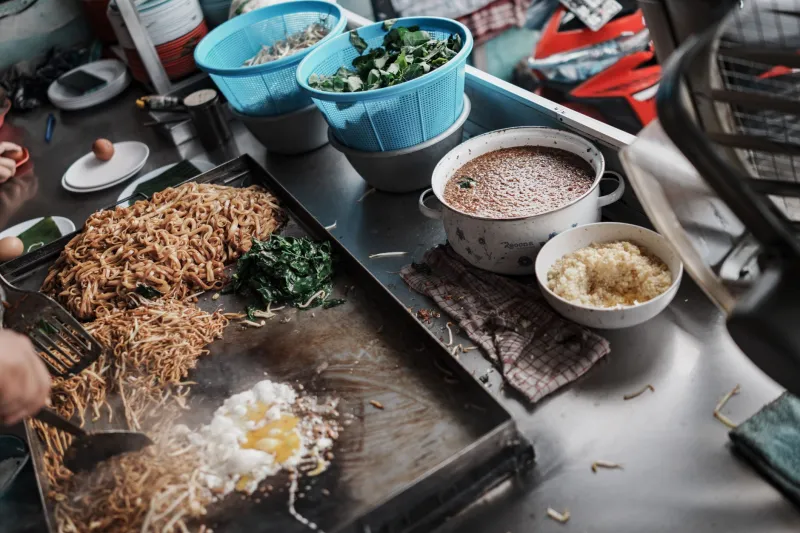
You do not need a restaurant teppan. A large electric griddle is the workhorse here, and a second smaller griddle or a wide nonstick skillet is a useful backup. Put the griddle in the middle of the table or on a side counter where guests can stand around it. Then build stations in the order people will use them: batter and ladle, shredded cabbage and sprouts, pork or meat alternatives, noodles, egg, and toppings. Keep each station in its own sheet pan or bowl so people are not reaching across hot surfaces.
Label everything. This sounds fussy, but it prevents the classic party problem where someone puts bacon into the vegetarian pile or uses the wheat batter by mistake. Small cards or masking tape work fine. Keep a stack of clean plates on one end and a landing zone on the other. Cooked okonomiyaki need a place to rest and stay warm. A sheet pan in a 200°F oven is a simple holding area, though the first ones will disappear before they get there.
Prep the batter and cabbage before anyone rings the bell
Hiroshima okonomiyaki batter is thin. It is not a thick pancake batter. For a party, make it a few hours ahead and keep it cold. A basic batch for six to eight people: 1 1/2 cups all-purpose flour, 1 1/4 cups water, 1 teaspoon dashi powder, and a pinch of salt. Whisk until just combined and let it rest. If you want a gluten-free version, use rice flour with a little cornstarch and check your dashi and sauces for wheat. Keep the GF batter in a clearly marked pitcher with its own ladle.
Shred cabbage the day before. Two large heads of green cabbage should cover six to eight generous okonomiyaki, depending on how heavy-handed everyone is. Store it in zip-top bags with a paper towel to catch moisture. Cook the yakisoba noodles ahead and toss them with a little oil so they do not clump. Slice scallions, set out pickled ginger, and make or buy okonomiyaki sauce. A quick US-friendly stand-in: ketchup, Worcestershire sauce, soy sauce, and a spoonful of sugar simmered together. Japanese mayo is worth buying; it is tangier and thinner than American mayo and makes the whole thing taste right.
Make room for gluten-free and vegetarian builds
Dietary swaps are easier when you treat them as separate lanes rather than afterthoughts. For gluten-free guests, use GF batter, GF soy sauce, GF noodles, and separate utensils. For vegetarian guests, skip the pork and use mushrooms, extra cabbage, tofu, or a little cooked sweet potato. Dashi is the sneaky ingredient; use kombu dashi or a vegetable stock if needed. Keep one small griddle or skillet for allergy-friendly cooking if you can. If not, cook those orders first, then clean the surface before the rest of the party.
Also remember that Hiroshima-style okonomiyaki is not a delicate dish. It is hearty, cabbage-forward, and a little messy. Tell guests that the first one is a practice round. The host should make the first okonomiyaki as a demo, narrating the layers: batter, cabbage, sprouts, pork, noodles, egg. Then let people take over. A good party has a few imperfect folds and a few spills. That is part of the fun.
A realistic timeline for six to eight
Thirty minutes before guests arrive, preheat the griddle, set out stations, and put drinks in a cooler or bucket. Fifteen minutes before, do a final check on batter, cabbage, noodles, and sauces. When people arrive, serve a small snack so no one is starving while the first round cooks. A bowl of edamame or cucumber with sesame oil is enough.
Once everyone has a drink, demonstrate one okonomiyaki. It will take about 10 to 12 minutes. After that, cook two or three at a time if your griddle is wide enough. Do not crowd it. For eight people, plan on about eight to ten okonomiyaki, plus extra cabbage for seconds. The timing gets easier after the first batch. Keep cooked ones warm in the oven, and ask one guest to be your runner, ferrying plates and refilling toppings. The host stays at the griddle only if they want to. Otherwise, hand the spatula to a confident guest and step back.
The US grocery list that keeps you out of the weeds
Pick up two large heads of green cabbage, bean sprouts, scallions, eggs, thin-cut pork belly or bacon, yakisoba noodles, all-purpose flour, rice flour for GF guests, dashi powder, okonomiyaki sauce, Japanese mayo, aonori, bonito flakes, pickled ginger, and neutral oil. Asian groceries and larger supermarkets with international aisles will cover most of this. If you cannot find tenkasu, crushed plain tempura flakes or even crushed pork rinds can add crunch. For vegetarian guests, add mushrooms, tofu, and extra cabbage. For gluten-free guests, confirm the noodles and soy sauce.
Keep the party moving
The best okonomiyaki nights are not the ones where everything is perfect. They are the ones where the griddle stays hot, the cabbage is ready, and nobody is stuck in the kitchen alone. Set up the stations, make the batter ahead, label the dietary lanes, and let your friends build their own dinner. The griddle does the rest.