Stop Stirring, Start Stacking: The Case for Layered Hiroshima Okonomiyaki at Home
The pancake that is not really a pancake
Hiroshima-style okonomiyaki gets called a savory pancake in English, which is understandable and also a little misleading. A pancake implies batter as the main event. In Hiroshima, the batter is more like a foundation: a thin crepe that holds up a serious stack of cabbage, bean sprouts, pork, noodles, and egg. You do not mix everything into a bowl and pour it out. You build.
That distinction matters at home. If you have tried okonomiyaki in a US kitchen and ended up with a wet, dense disk that tasted more like a cabbage omelet than a griddled street-food classic, the problem was probably not your ingredients. It was the architecture. Hiroshima-style okonomiyaki is a layered dish, and once you treat it that way, the whole project gets easier and more consistent.
This is not a purist lecture. It is a practical argument for stacking, especially on American stoves with American supermarket ingredients. The method is forgiving once you understand the order of operations.
The stack, from bottom to top
A classic Hiroshima-style build goes something like this:
- A thin crepe of batter on the griddle.
- A heap of shredded cabbage and bean sprouts on top.
- Thin pork slices laid over the vegetables.
- A lid or dome to steam the cabbage until it wilts.
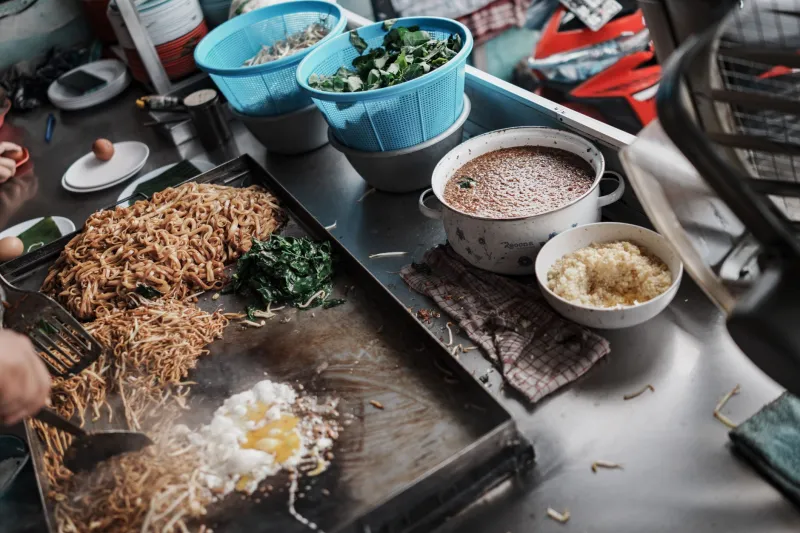
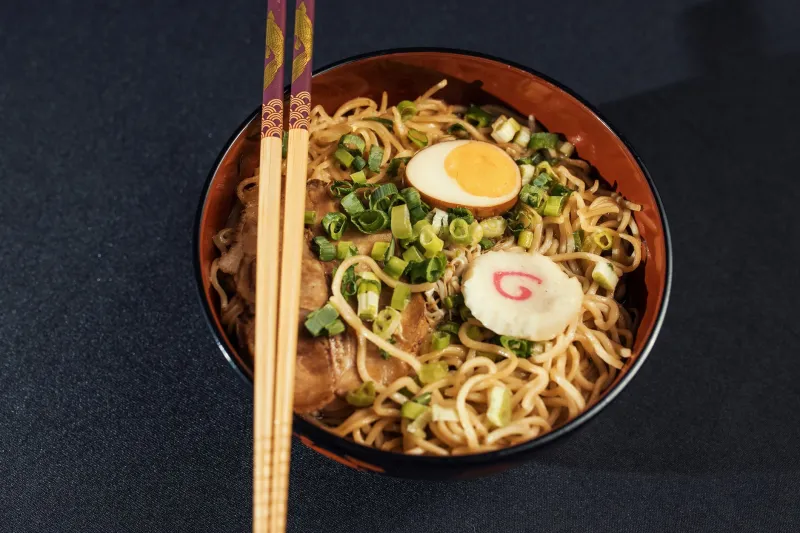
- Par-cooked yakisoba noodles added alongside or underneath, depending on your setup.
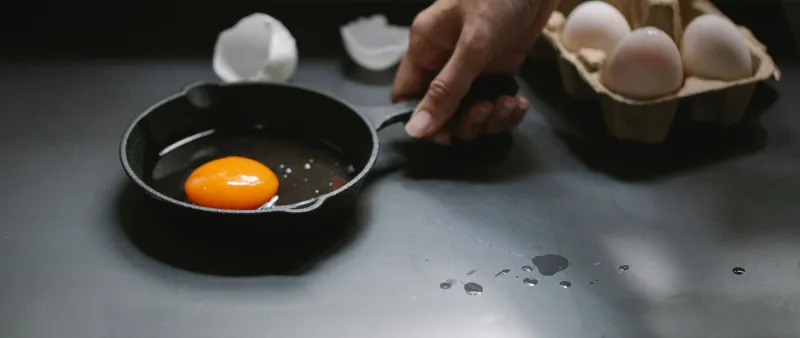
- A fried egg, usually cooked separately and then stacked onto the noodles.
- Okonomiyaki sauce, mayonnaise, aonori, and bonito flakes at the end.
The important thing is not that every home cook follows a restaurant script. It is that the cabbage stays crisp-tender instead of waterlogged, the crepe stays intact, and the noodles get a little griddle time. Layering lets you control each of those things. Mixing cabbage into batter does the opposite: it releases water into the batter and turns the whole thing into a steaming mass before the surface can brown.
Translating the method to a US stove
Restaurant teppan is wide, flat, and hot. Home burners are none of those things. An 8- to 10-inch nonstick skillet is the easiest entry point because flipping is less terrifying. A carbon-steel skillet gives you better browning and a crisper edge, but it needs a little more fat and a little more attention. Cast iron can work, though it holds heat so aggressively that cabbage can scorch before the center softens. If cast iron is what you have, keep the heat moderate and use a lid.
Electric coil stoves are slow to respond, so preheat longer than you think you need to. Induction is fast and precise, which is great for the crepe but can be harsh on the cabbage. Start at medium-low and adjust. Gas gives you the most familiar control, but do not crank it. Hiroshima okonomiyaki is not a stir-fry. It is a steam-and-sear operation.
Use a lid. This is the most underrated home-kitchen move. A lid traps steam so the cabbage wilts without requiring a long, dry cook. If you do not have a lid that fits, a sheet pan or a large piece of foil works. You are not trying to pressure-cook the thing. You just want the cabbage to soften enough that the stack holds together when you flip it.
A grocery-store map for the American kitchen
You do not need a Japanese specialty market to make a credible version. All-purpose flour, water, and a little dashi powder make the crepe. Bagged coleslaw mix is a perfectly good shortcut for cabbage, though it is usually drier and finer than whole cabbage, so use it promptly. Fresh bean sprouts are common in produce sections. Thin-cut pork loin chops can be sliced at home and pounded thin. Fresh yakisoba noodles are increasingly available, but dried ramen or even fresh lo mein noodles can stand in if you cook them just shy of done and drain them well.
For sauce, bottled okonomiyaki sauce is ideal, but a mix of ketchup, Worcestershire sauce, and a little soy sauce gets you into the right zone. Kewpie mayonnaise is worth seeking out, but regular mayo with a splash of rice vinegar is fine. Aonori and bonito flakes are optional garnishes, not structural requirements. If you cannot find them, do not skip the dish. Skip the garnish.
The one ingredient you should not cheap out on is the cabbage. Wet cabbage is the enemy. If you wash it, dry it thoroughly. If it looks tired and limp, use it in something else. The stack depends on cabbage that still has some life in it.
The flip is a negotiation, not a performance
Flipping a loaded Hiroshima okonomiyaki is the moment most home cooks panic. Do not treat it like a pancake toss. Use two spatulas, or slide the stack onto a plate and invert it back into the pan. Press lightly with the spatula after the flip, just enough to keep contact with the heat. Do not press hard. You are not making a panini.
If the stack feels fragile, give it another minute before you flip. A little extra steam is better than a collapsed dinner. And do not flip more than twice. The more you handle it, the more likely the cabbage and noodles are to scatter.
Mistakes that make home versions soggy or flat
The first mistake is mixing the cabbage into the batter. The second is using too much batter. The crepe should be thin enough that you can almost see the pan through it. The third is crowding the skillet. Build one at a time unless you have a griddle large enough to keep the stacks separated. The fourth is cooking at high heat from the start. You want the crepe to set and the cabbage to steam, not the outside to burn while the inside stays raw.
Another common issue is adding sauce too early. Sauce belongs at the end, after the stack has had a chance to crisp. If you sauce the crepe while it is still cooking, you are introducing moisture and sugar to a surface that needs to stay dry. Finally, let the finished okonomiyaki rest for a minute or two before cutting. It holds together better, and the steam finishes the job.
A weeknight version worth repeating
For a home-cook version, keep the stack modest. Make a thin crepe, add a handful of cabbage and sprouts, lay on two or three thin pork slices, cover, and steam for a few minutes. Slide the stack onto a plate, add cooked noodles to the pan, then flip the stack back on top of the noodles. Cook until the bottom is crisp, top with a fried egg, and finish with sauce and mayo. It is not a restaurant replica, but it is a real Hiroshima-style dinner, and it will teach you more than a bowl of mixed batter ever could.