The Leftover Stack: A Thanksgiving-to-Hiroshima Okonomiyaki Game Plan
Thanksgiving leftovers usually follow a predictable script: sandwich, soup, repeat. This year, try a different ending. Hiroshima-style okonomiyaki is a layered savory pancake—thin crepe, a heap of cabbage, noodles, and a crisp egg blanket—and it happens to be one of the most forgiving vehicles for roast turkey, roasted vegetables, and even a spoonful of cranberry sauce. The goal is not to make a Thanksgiving pancake that tastes like a holiday plate. The goal is to use the holiday plate to make a better okonomiyaki.
At Nagi Hiroshima, we usually treat okonomiyaki as a griddle-to-table dish, the kind of thing you build in front of people and eat the moment the sauce goes on. The day after Thanksgiving is a good excuse to bring that same energy to the home kitchen. You already have cooked components. You just need to reorganize them.
Why Hiroshima-style is the right frame for leftovers
Osaka-style okonomiyaki mixes cabbage and batter into one thick pancake. Hiroshima-style builds upward. A thin batter crepe goes down first, then cabbage and bean sprouts, then pork or another protein, then noodles, then egg. The layers stay distinct enough that each one has a job. Cabbage gives structure and sweetness. Noodles add chew. Egg seals the top and makes the whole thing feel like a meal rather than a fritter.
That structure is exactly what leftovers need. Thanksgiving food is already cooked, already seasoned, and often already a little wet. Hiroshima-style okonomiyaki does not ask those ingredients to become something new. It asks them to take a position in the stack.
The layer map: what goes where
Think of this as a leftovers map, not a strict recipe. You can build two large okonomiyaki from about three cups of shredded cabbage and a handful of leftovers.
- Bottom layer: a thin crepe made from about half a cup of batter. It is a floor, not a pancake. Spread it thin and let it set before adding anything heavy.
- Cabbage layer: two cups of finely shredded green cabbage, a quarter cup of sliced scallions, and a small handful of bean sprouts if you have them. Pat everything dry. Wet cabbage is the fastest route to a soggy stack.
- Turkey layer: about half a cup of shredded roast turkey per pancake. Shred it rather than slicing it thick; shredded turkey hugs the cabbage and heats through faster.
- Vegetable layer: a third of a cup of chopped roasted carrots, Brussels sprouts, or squash. Chop them small and pat off any oil. Roasted vegetables are already soft, so they need to be treated as a topping, not a filling.
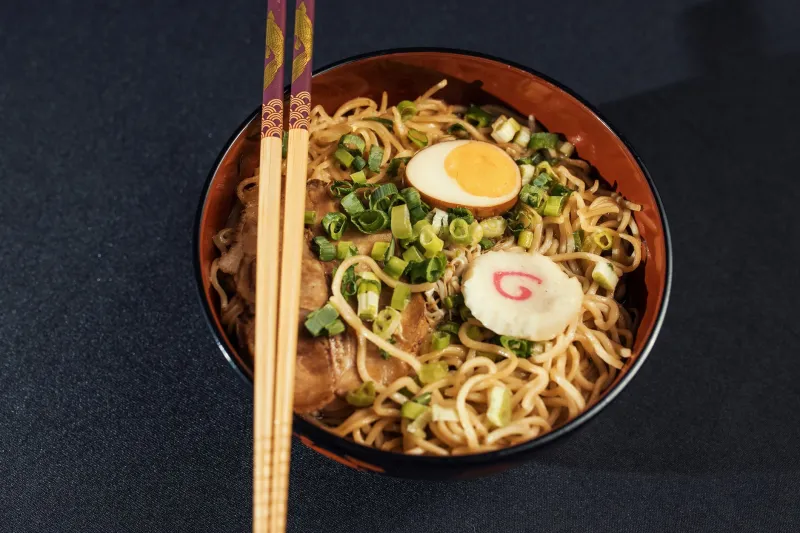
- Noodle layer: one cup of cooked yakisoba noodles or ramen, drained well and tossed with a teaspoon of oil. Season them lightly with salt and pepper, or a splash of okonomiyaki sauce. They should taste good on their own.
- Egg layer: one large egg, beaten, cooked flat on the griddle, and flipped onto the stack—or cooked directly over the noodles if you are comfortable with a two-spatula flip.
- Finishing layer: okonomiyaki sauce, a thin zigzag of mayonnaise, aonori, and pickled ginger. This is where cranberry sauce and gravy can enter, but carefully.
What to do with stuffing, gravy, and cranberry sauce
Stuffing is the trickiest leftover. It is usually moist, dense, and heavily seasoned. Do not lay it down in a thick slab. Crumble a small amount—two tablespoons at most—and toast it in a dry skillet until the edges are crisp. Scatter it over the cabbage layer like breadcrumbs. It will add flavor and texture without turning the middle of the okonomiyaki into pudding.
Gravy is a sauce, not a layer. Warm it, whisk it with a little ketchup and Worcestershire sauce, and use it sparingly in place of some of the okonomiyaki sauce. Gravy is salty and rich, so a little goes a long way. If you want to keep the dish recognizably Hiroshima, let okonomiyaki sauce lead and let gravy play backup.
Cranberry sauce is a bright finishing note. Whisk one tablespoon into three tablespoons of okonomiyaki sauce for a tart, fruit-forward glaze. Do not pour cranberry sauce directly onto the griddle; the sugar will burn before the egg sets. Save it for the plate.
The batter, the griddle, and the flip
For two okonomiyaki, whisk one cup of all-purpose flour, a quarter cup of potato starch or cornstarch, one and a quarter cups of cold dashi or water, one egg, and a pinch of salt. Rest the batter for fifteen minutes while you organize the leftovers. It should be thin enough to swirl around the pan like crepe batter.
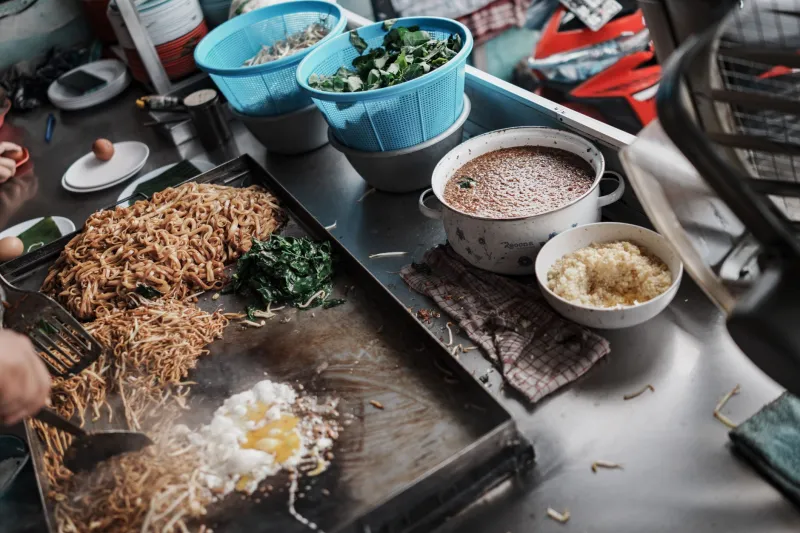
Heat a nonstick skillet or flat griddle over medium-low heat. Oil it lightly. Pour in half the batter and spread it into an eight- or nine-inch circle. Let it set for two minutes. Pile on the cabbage mixture, then the turkey, then the vegetables. Cover with a lid for four to five minutes so the cabbage steams and the turkey heats through. Add the noodles in an even layer and cook another two minutes.
For the egg, the home-kitchen shortcut is to cook the beaten egg in a separate small nonstick pan and slide it onto the stack. The traditional move is to pour the egg over the noodles, let it set, and flip the whole stack onto the egg with two spatulas. Either way, the egg should be just set, not rubbery. Slide the finished okonomiyaki onto a plate and sauce it immediately.
Troubleshooting: wet stuffing, dry turkey, and fragile stacks
Wet stuffing: Crumble and toast it. Use less than you think. If the stuffing is very moist, skip it inside the stack and serve it on the side.
Dry turkey: Shred it and toss it with a teaspoon of gravy, broth, or mayonnaise before it goes on the griddle. You are not making turkey salad; you are just giving the meat a little moisture so it does not dry out further.
Soggy roasted vegetables: Chop them smaller and pat them dry. If they are oily, rinse them briefly and dry them well. Oil on the griddle is fine; oil trapped inside the stack is not.
A stack that will not hold: Use a plate to help you flip. Slide the okonomiyaki onto a plate, invert it back into the pan, and finish cooking the other side for a minute. A slightly messy okonomiyaki still tastes good.
Too much cranberry sauce: Keep it on the side or whisk it into the sauce. Sugar burns quickly on a hot griddle.
Make it a post-holiday ritual
Set out the leftovers in small bowls and let people build their own. Keep the cabbage dry, the noodles hot, and the sauce within reach. This is not a traditional Hiroshima recipe, and it does not need to be. It is a home-cooking bridge between a Japanese griddle dish and an American holiday table—one that turns the last of the turkey into something crisp, savory, and a little bit surprising.