No Hood Required: Hiroshima Okonomiyaki in a Rental Kitchen
Every apartment cook knows the moment. The griddle crosses 400°F, the first slick of oil hits the surface, and the smoke alarm in the hallway starts its little chirp of judgment. Hiroshima-style okonomiyaki has a reputation as a restaurant-griddle project — a wide teppan, two iron spatulas, a hood roaring overhead — but the layered version is honestly one of the more forgiving things you can cook in a small kitchen. It just asks for different habits than the ones you'd use standing at a counter in Hiroshima.
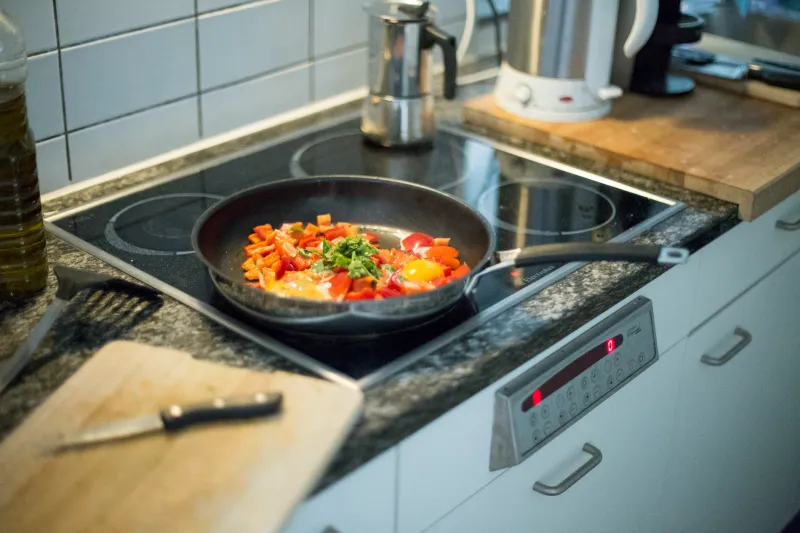
This is the rental-kitchen version: an electric griddle on the counter, one window cracked two inches, no vent hood anywhere in sight.
The layered style is already the apartment-friendly one
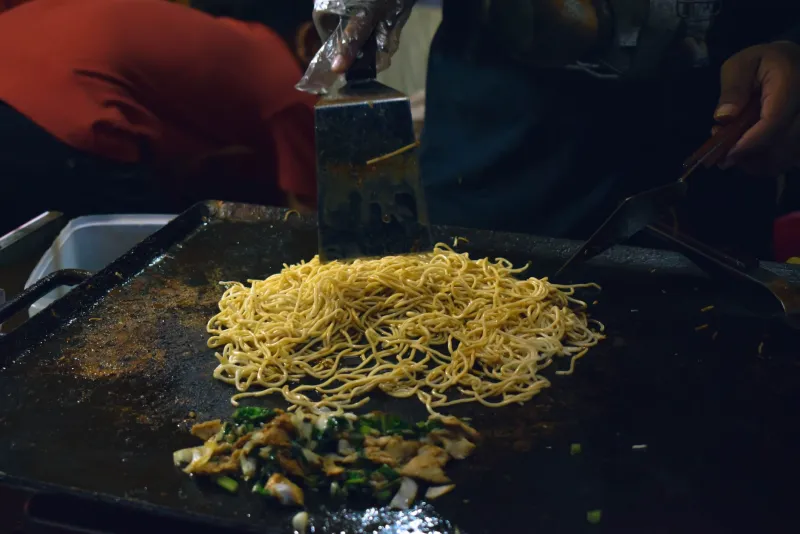
Osaka-style okonomiyaki — everything mixed into one batter, one dramatic flip — throws a lot of wet batter into the air. Hiroshima style gets built in stages: a thin crepe, a mountain of cabbage steamed under a lid, a nest of noodles, an egg. Most of the cooking happens covered at moderate heat, which means less oil aerosolized and far fewer acrobatic maneuvers.
One okonomiyaki takes about 15 minutes start to finish. Two take about 22. That's a weeknight number, not a weekend project.
Pick the oil by smoke point, not by personality
You want a fat that stays calm past 400°F. Avocado oil (smoke point around 520°F), rice bran oil, refined canola, and peanut oil all behave. Skip the extra-virgin olive oil, the butter, and the toasted sesame oil for griddle work — all three start complaining well below where you actually want to cook. If you want sesame flavor, add a drop off the heat at the end.
Two smaller rules that matter more than they sound:
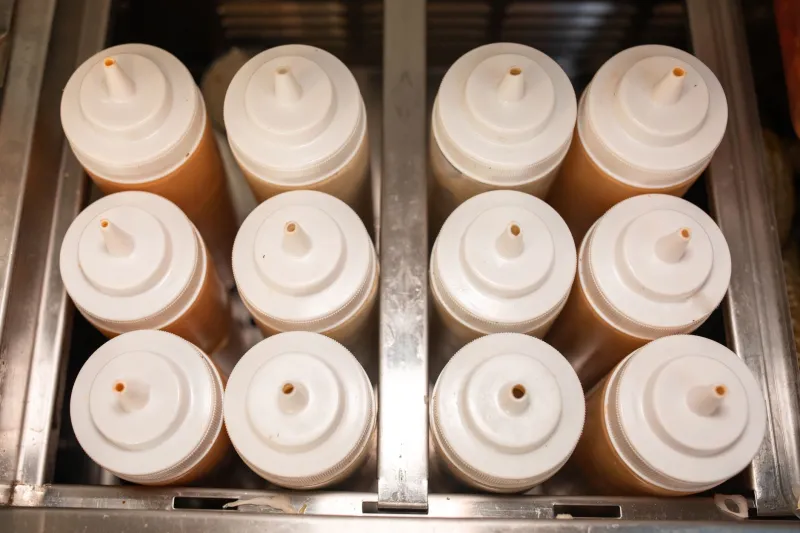
- Buy a squeeze bottle instead of aerosol spray. Cooking spray leaves a tacky film that browns and smokes on the second or third use. A $3 bottle gives you control and a clean surface.
- Measure. A teaspoon of oil per okonomiyaki is plenty on a nonstick griddle. More oil doesn't mean more crisp — it means more haze.
375°F is the number to aim for
The dial numbers on a $40 electric griddle are aspirational. A $15 infrared thermometer tells you the truth in half a second. Target 350–375°F at the center of the surface.
Above 400°F you get smoke, spitting, and cabbage that scorches on the bottom before it steams through. Below 325°F the crepe goes pale and leathery and the whole thing drags. Preheat 8–10 minutes with a lid or a sheet pan tented over the surface so the heat evens out across the plate.
Cabbage prep is splatter control
Water is what spits. Everything you do to the cabbage should be about removing the water that would otherwise hit hot oil.
Shred it fine — about 1/16 inch, which a mandoline handles in two minutes. Keep it cold until the second it hits the griddle. Don't salt it and let it weep into a puddle. A quick twist in a clean kitchen towel and a pat dry is enough; you're not making sauerkraut, you're making a stack.
For the batter: half a cup of all-purpose flour, half a cup of cold water, a pinch of dashi powder, whisked just until it comes together. Lumps are fine. Thin batter spreads fast and sets before anything can run underneath it.
Then the move that saves your backsplash: pile, don't spread. Mound the cabbage in the middle and leave a one-inch border of bare crepe all the way around. Lid on. The steam does the cooking, and the border catches anything that tries to escape.
Finally, a $6 mesh splatter screen. It won't stop smoke, but it stops the fine mist of oil that coats cabinets and, eventually, your security deposit.
Airflow when there's no hood
You can't install ventilation in a rental, but you can move air deliberately.
- Open the window four to six inches and put a box fan in the opening, facing out. It pulls kitchen air toward the window instead of pushing it deeper into the apartment.
- Start the fan before the griddle heats, not after the alarm goes off. Run it ten minutes past the last flip.
- Set up as close to that window as your counter allows. Six feet closer makes a real difference.
- Run the recirculating microwave hood or the bathroom fan as a second path, and actually replace that grease filter now and then.
- Electric only, please. A butane or propane camp stove indoors is a carbon monoxide problem, not a cooking hack.
Timing that fits a small kitchen
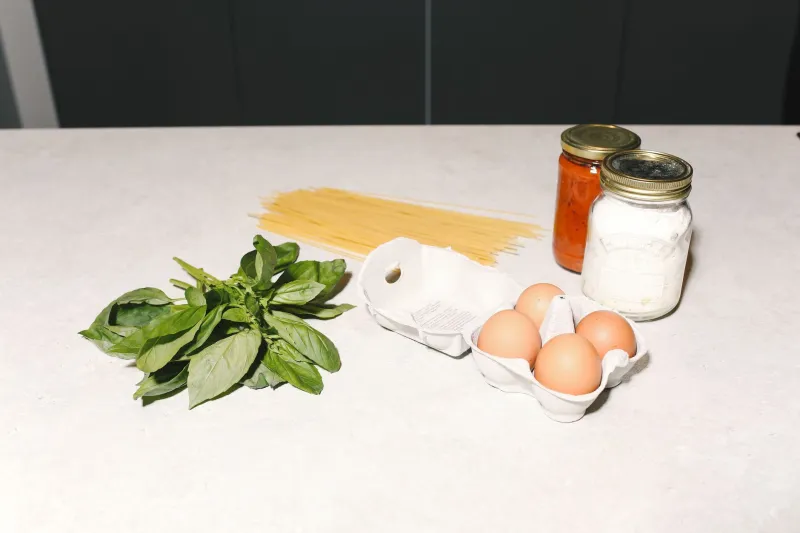
Stage everything on one sheet pan before you turn the griddle on: shredded cabbage, batter in a measuring cup, portioned noodles, two eggs cracked into a small bowl, bacon slices, sauce in a squeeze bottle. A small kitchen has no room for mid-cook scrambling.
The sequence, if you're cooking one at a time:
- Crepe, 2 minutes, no lid
- Cabbage mound plus lid, 5 minutes
- Noodles fanned out on the free side of the griddle, 2 minutes
- Flip the cabbage stack onto the noodles with two spatulas
- Crack the egg in the empty spot, break the yolk, flip the whole stack onto it, 1 minute
- Sauce, mayo, aonori — off the heat
The first one rests on a plate while the second cooks. Nobody at the table will notice.
Cleanup and storage, or why it stays a weeknight thing
Let the griddle cool to warm-but-not-hot, about 10 to 15 minutes. Wipe it down with a damp paper towel and use a bench scraper on the caramelized sauce at the edges. Line the drip tray with foil before you cook — that's the single biggest time-saver in the whole routine. Keep the plug and the control dial dry; never dunk the unit.
Finish with a thin film of oil worked in with a paper towel, wrap the cord, and store the griddle flat with a sheet of parchment on the surface. Better yet, leave it on the counter if you have the space. A griddle you have to dig out of a closet is a griddle you stop using by February.
One honest caveat
You will still smell like okonomiyaki. Close the bedroom door, crack a window, and accept it — that's not a flaw in the method. It's the part that reminds you dinner was cooked on a hot plate instead of reheated in a box.