Crisp Edges, Weeknight Speed: Hiroshima-Style Yakisoba on the Home Griddle
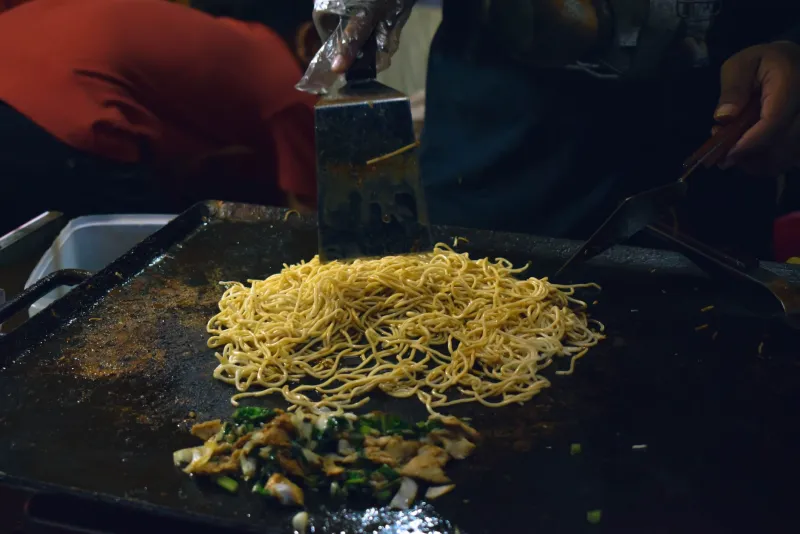
Yakisoba has a reputation problem in the US. It shows up as a side dish, a cafeteria filler, or a sweet-savory noodle pile with no particular point of view. Hiroshima-style yakisoba deserves better. On the griddle, the noodles get crisp at the edges, the cabbage turns sweet, and the pork gives the whole thing a savory backbone. It is fast enough for a Tuesday and different enough to feel like a small event.
This is not okonomiyaki with noodles folded in. It is its own weeknight griddle dish.
Why Hiroshima-style yakisoba is its own thing
Hiroshima-style okonomiyaki is famous for its layers, and noodles are one of them. But the noodles also have a life of their own on the griddle. The style to aim for is crisp, not soupy. The noodles should pick up browned edges and a little chew, while the cabbage stays tender-crisp and the pork gets a bit of char.
That texture comes from restraint. Do not stir constantly. Do not add sauce too early. Do not crowd the pan. Cook the components in broad, flat layers, let them sit, then toss at the end. If you have ever made a good hash brown or a crispy rice dish, you already know the move: leave it alone.
The building blocks
For two generous weeknight servings, you need:
- 12 to 14 ounces fresh yakisoba noodles
- 4 cups shredded green cabbage
- 6 to 8 ounces thinly sliced pork
- 1 small onion, thinly sliced
- 2 tablespoons neutral oil
- Salt and pepper
- Yakisoba sauce, okonomiyaki sauce, or a homemade weeknight sauce
- Aonori, pickled ginger, or sesame seeds, optional
Fresh yakisoba noodles are usually in the refrigerated case near the tofu or in the Asian foods section. If you cannot find them, use fresh lo mein noodles or cooked dried ramen noodles that have been drained well. Avoid using the flavor packet. Bagged coleslaw mix is a perfectly good shortcut for cabbage, though it will cook faster than hand-shredded cabbage.
For pork, thin-cut pork loin is ideal. Boneless country-style ribs sliced thin, pork shoulder, or even thick-cut bacon can stand in. If you want a vegetarian version, use sliced mushrooms and extra cabbage, and add a little soy sauce for depth.
Sauce choices that work with the griddle
Bottled yakisoba sauce is the simplest choice. It is tangier and thinner than okonomiyaki sauce, which helps it coat noodles without turning them into a sticky mass. Okonomiyaki sauce works too, but use less; it is sweeter and thicker. Tonkatsu sauce is a decent emergency substitute if you thin it with a teaspoon of Worcestershire.
A homemade weeknight sauce takes about a minute: mix 3 tablespoons ketchup, 2 tablespoons Worcestershire sauce, 1 tablespoon soy sauce, 1 teaspoon sugar, and a dash of oyster sauce if you have it. Taste it. If it is too sharp, add a little more sugar. If it is too sweet, add Worcestershire. This is not a sauce-bar project. It is a single jar you shake and use.
Add the sauce at the end, off the heat or with the heat turned low. If you add it early, the sugar in the sauce burns before the noodles crisp.
Cast iron, electric griddle, or big skillet
A large cast-iron skillet is the most useful tool for most American kitchens. Set it over medium-high heat until it is good and hot, then add oil. A 12-inch skillet will hold two servings if you are careful; a 10-inch pan will need to cook in batches.
An electric griddle is even closer to the Hiroshima setup. Set it to 375°F to 400°F and use a wide spatula. The flat surface gives the noodles more room to crisp. A large nonstick skillet works too, though it will not brown the noodles quite as aggressively.
Whatever you use, preheat it well. A cold pan steams the cabbage and makes the noodles greasy.
A 30-minute weeknight plan
Start by heating your griddle or skillet over medium-high heat. While it heats, slice the pork and onion and shred the cabbage if you have not bought it pre-shredded. Loosen the noodles with your fingers or a quick rinse and drain; they should not be wet.
Add oil to the hot pan, then spread the pork in a single layer. Season lightly with salt and pepper and let it cook for 2 minutes before flipping. Push it to one side. Add the onion and cabbage, spread them out, and cook for 3 to 4 minutes, tossing once or twice, until the cabbage is wilted but still has some bite. Move the vegetables to the side with the pork.
Add a little more oil if needed. Put the noodles in the clear space and press them into a flat layer. Let them sit for 2 to 3 minutes without moving. Flip sections with a spatula, press again, and let them crisp for another 2 minutes. This is the step that makes the dish.
Now combine everything. Toss the noodles with the pork and cabbage, using two spatulas or a pair of tongs. Add 3 to 4 tablespoons of sauce, starting small, and toss until the noodles are glossy. Taste and add more sauce if you want. Turn off the heat.
Serving without a puddle
Hiroshima-style yakisoba is best served right away, on warm plates, with a little extra sauce on the side. Top with aonori, pickled ginger, or sesame seeds if you like. A fried egg on top is not required, but it is a good weeknight move; the runny yolk makes a sort of extra sauce.
The one thing to avoid is a puddle. If the cabbage releases a lot of water, turn the heat up for a minute before adding the sauce. If the noodles seem dry, add a splash of water, not more oil. The goal is crisp edges and a glossy coat, not a stew.
Leftovers are decent reheated in a hot skillet, but they will lose some crispness. For a faster next-day lunch, fold cold yakisoba into a hot skillet with a little oil and let it sit until it browns again. That is the same trick as the first cook: patience, then toss.