Maple Leaf, Made at Home: Baking Hiroshima Momiji Manju in an American Kitchen
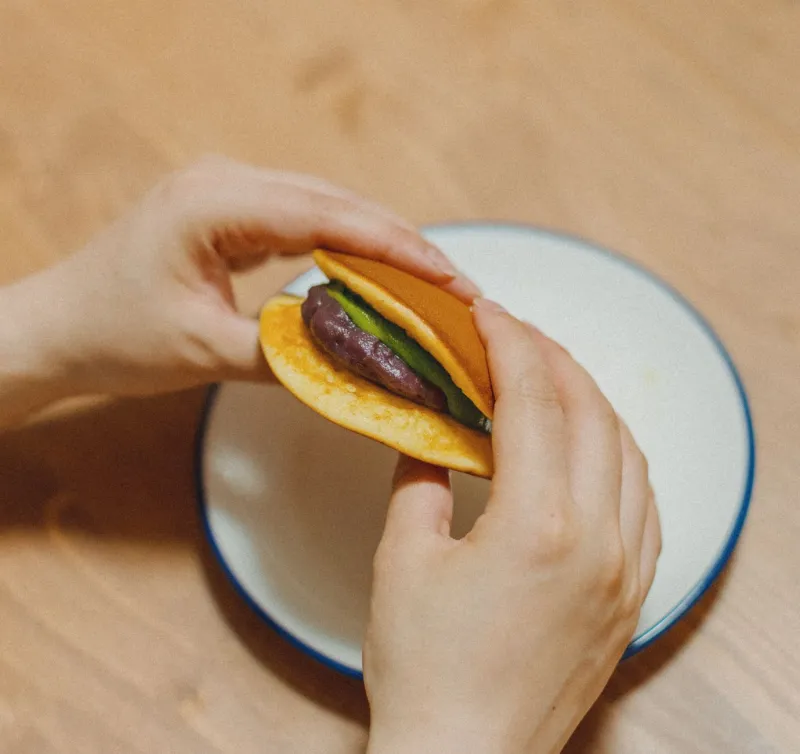
Momiji manju are the maple-leaf-shaped cakes you see stacked in Hiroshima souvenir shops: soft, griddle-baked, and filled with sweet red bean paste or custard. They are almost always bought, rarely made, and that is a shame. The cakes are forgiving, the molds are more available in the US than they used to be, and the whole project fits neatly into a Saturday afternoon.
A Souvenir That Belongs on a Sheet Pan
The cakes are tied to Miyajima and Hatsukaichi, near Hiroshima, where maple leaves are a local emblem. Similar grilled bean cakes exist across Japan, but the leaf shape and the soft, griddle-baked style became a regional signature in the twentieth century. Today the souvenir versions are everywhere, but home bakers outside Japan can make a very respectable version with a stovetop mold and a bowl.
What Makes a Good Momiji Manju
A good momiji manju is not a crunchy cookie. It is closer to a small pancake or a soft castella cake: tender, slightly springy, and sweet enough to hold its own against the filling. The batter should be thin enough to spread into the leaf shape but thick enough to stay put when you close the mold. The filling should be generous but not so generous that it leaks out the seams.
Traditional red bean paste is the standard, but Hiroshima shops also sell custard, chocolate, matcha, cheese, and seasonal fruit fillings. Lemon curd is a natural fit for the region's citrus, and it works well in a home kitchen because it is already cooked and thick.
Gear and Ingredients for US Kitchens
You do not need a commercial machine. A cast-aluminum momiji manju mold for a stovetop works well and often costs about $30 to $60 online. Nonstick electric sandwich makers with interchangeable leaf plates also exist, but a simple stovetop mold gives you more control. Look for a mold with a hinge and a handle that stays cool enough to flip safely.
For ingredients, US supermarkets and Asian groceries cover the basics: all-purpose flour, baking powder, eggs, milk, sugar, honey, butter, and vanilla. Canned red bean paste — often labeled koshian or ogura an — is sold at Japanese and Korean groceries and online. Chocolate chips or a simple ganache work for the chocolate version. A kitchen scale helps, but measuring cups are fine if you spoon and level the flour.
The Reliable Home Method
This batter makes about 12 to 16 cakes, depending on the size of your mold.
- 1 1/2 cups all-purpose flour
- 1 teaspoon baking powder
- 1/4 teaspoon salt
- 2 large eggs
- 1/2 cup granulated sugar
- 3/4 cup whole milk
- 2 tablespoons honey
- 2 tablespoons melted butter, plus more for the mold
Whisk the flour, baking powder, and salt. In another bowl, whisk the eggs and sugar until pale, then add the milk, honey, and melted butter. Stir the dry ingredients into the wet ingredients until just combined. Rest the batter for 20 minutes at room temperature. It should be pourable but not watery.
Heat the mold over medium-low heat and brush both sides lightly with butter. Spoon a thin layer of batter into each leaf cavity, staying away from the edges. Add about 1 teaspoon of filling in the center. Cover with a little more batter, close the mold, and flip after 2 minutes. Cook for 2 to 3 minutes per side, checking often. The cakes should be golden and set but still soft. Transfer to a rack and cool for a few minutes before filling more molds.
Three Fillings to Try
Red Bean
Warm canned koshian slightly so it pipes easily, but let it cool before using. Spoon or pipe about 1 teaspoon into each cake. Do not overfill; red bean paste is dense and will push through the seams.
Custard
Make a simple custard with 1 cup milk, 2 egg yolks, 3 tablespoons sugar, 1 tablespoon cornstarch, and 1 tablespoon butter. Cook over medium heat, whisking constantly, until thick. Add vanilla and cool completely before filling. A chilled custard is much easier to handle.
Chocolate
Use a chilled ganache made from equal parts chopped chocolate and warm cream, or use chocolate chips in a pinch. Keep the filling cold and use a little less than you think you need. Chocolate spreads fast under heat.
Troubleshooting and Storage
If the cakes stick, the mold was not hot enough or not greased well. If the batter runs out the sides, you are overfilling. If the cakes taste dry, you probably cooked them too long — pull them when they are just golden and still give slightly to the touch. Cooled cakes keep for two days in a covered container, and they freeze well for about a month. Reheat in a toaster oven, not a microwave, to bring back the soft, griddle-baked texture.
They will not taste exactly like the souvenir shop version. They will taste like a weekend project worth repeating — which is its own kind of Hiroshima souvenir.