The Hiroshima Pantry Edit: Five Keepers, Three Passes

Photo: Hiroshima okonomiyaki pantry ingredients okonomiyaki sauce Kewpie mayonnaise aonori bonito flakes on kitchen counter, via c8.alamy.com
If you have ever stood in the condiment aisle of an H Mart or 99 Ranch with a basket and a vague plan, you know the feeling: every bottle looks essential, and half of them will sit in the door of your fridge until they fossilize. Hiroshima-style cooking is generous, but it is not complicated. The core pantry is small. These five items pull their weight across okonomiyaki, yakisoba, and fast griddle dinners. Three others are easy to buy and just as easy to regret.
1. Okonomiyaki sauce
This is the backbone. Hiroshima okonomiyaki wants a sauce that is sweet, tangy, and thick enough to cling to cabbage and noodles without turning into soup. Otafuku is the name you will see most often, and it is widely stocked in US Asian markets and online. Bulldog makes a fine version too. Do not confuse it with takoyaki sauce, which is thinner and more vinegar-forward. Use okonomiyaki sauce on the finished stack, on yakisoba, on fried eggs, and even on roasted vegetables. One bottle goes a long way. If you cannot find it, a 50/50 mix of tonkatsu sauce and Worcestershire gets you close, but the real thing is worth the shelf space.
2. Japanese-style mayonnaise
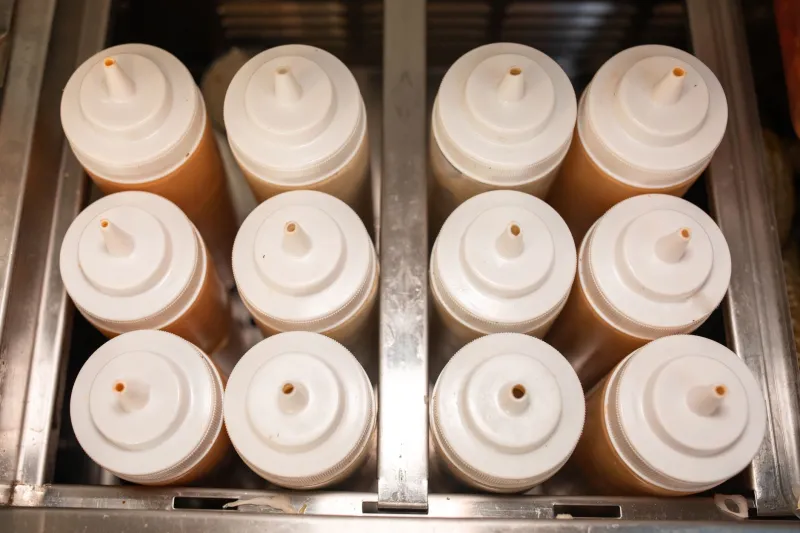
Kewpie is the default, and for good reason. It is richer and more eggy than American mayo, with a tang that cuts through the sauce. The squeeze bottle is the practical choice for drizzling over okonomiyaki and yakisoba. You will see both Japanese-made and US-made Kewpie; both work, though the Japanese version is a little more pronounced. Keep it in the fridge. If you are out, regular mayo will do in a pinch, but the finished plate will taste flatter. This is one bottle that earns its spot.
3. Fresh yakisoba noodles
Hiroshima-style yakisoba is not a boiled-pasta situation. The noodles are steamed, slightly wavy, and ready to hit the griddle. Look for refrigerated or frozen packages in the noodle section; Sun Noodle and Maruchan both sell suitable versions in the US. They cook in minutes and pick up sauce beautifully. Keep a couple of packs in the freezer and you have a weeknight griddle night ready to go. Dried ramen can work if you boil and drain it first, but it is a different texture. Fresh is the point.
4. Aonori
Aonori is dried green seaweed, finely ground, and it is the finish that makes the plate look and taste like Hiroshima. It is grassy, briny, and a little sweet. A small bag lasts months if you keep it sealed. Shirakiku and other Japanese brands are common in US stores. Sprinkle it over okonomiyaki, yakisoba, and even fries. If you cannot find aonori, torn nori sheets are a decent stand-in, but they are thicker and less fragrant. Buy the small bag; a little goes far.
5. Katsuobushi
Bonito flakes are the quiet umami bomb. They go on top of okonomiyaki and yakisoba, where the heat makes them dance, and they can be steeped for a quick dashi. Buy a small bag, keep it airtight, and use it within a few months. Yamahide and other brands are available in US Asian groceries. If you are feeding vegetarians, skip the flakes on their portion and use a little dashi powder or mushroom seasoning instead. For everyone else, this is a pantry keeper.
Three to skip
Specialty okonomiyaki flour blends
These blends are tempting because the bag says okonomiyaki, but they are mostly flour with a little yamaimo powder and sometimes dried bonito. All-purpose flour plus a little grated yamaimo (or even just all-purpose) makes a fine batter. The specialty bags are small, pricey, and rarely better than what you can mix yourself.
Takoyaki sauce
If you already own okonomiyaki sauce, you do not need takoyaki sauce for Hiroshima-style cooking. They are close cousins, and the okonomiyaki version is more versatile. Buy takoyaki sauce only if you are making takoyaki often enough to justify a second bottle.
Pre-made okonomiyaki kits
The boxed kits promise convenience, but you are paying for a small packet of flour and a tiny sauce sachet. You still need to buy cabbage, pork, eggs, and noodles. The sauce in the kit is often the weakest part. Skip the kit, buy a bottle of Otafuku, and use your own flour.
The bottom line
A Hiroshima pantry is not a museum of Japanese condiments. It is a working shelf. Start with sauce, mayo, noodles, aonori, and bonito flakes. Add cabbage, eggs, and pork belly when you shop for the week. Leave the specialty flour and boxed kits for someone else. Your griddle will thank you.