Cabbage on a Rice Crepe: Gluten-Free Hiroshima Okonomiyaki for Weeknights
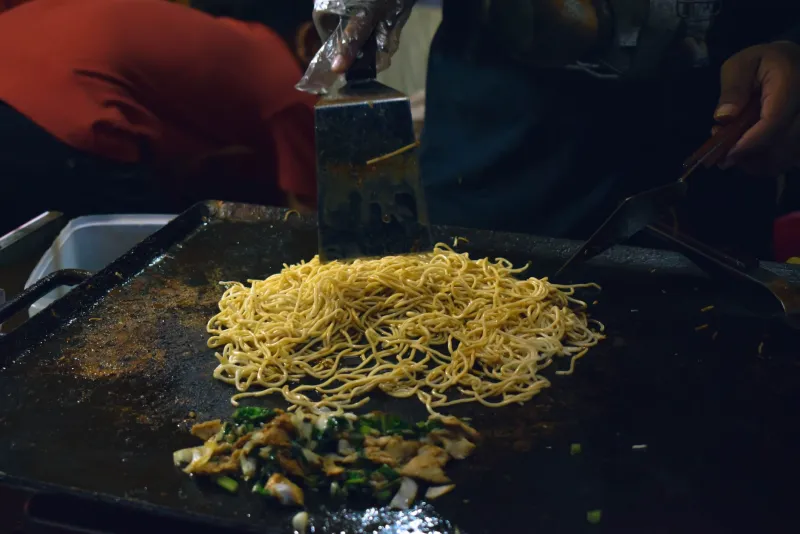
Photo: gluten-free Hiroshima okonomiyaki rice flour crepe on griddle with cabbage scallions and noodles, via c8.alamy.com
Hiroshima okonomiyaki is less a pancake than a short stack: a thin crepe, a heap of cabbage, a tangle of noodles, and an egg holding the whole thing together. That structure is why a gluten-free version can work. You are not trying to replace a thick, wheat-heavy batter. You are making a delicate rice-flour crepe that browns at the edges and stays out of the way while the cabbage and noodles do the heavy lifting.
Rice flour is not a straight swap
In a wheat batter, gluten gives stretch. Rice flour gives you almost none. White rice flour is the closest thing to a neutral base, but on its own it can turn gritty in the center and chalky at the rim. Sweet rice flour is worse for this job: it brings a mochi-like chew that makes the crepe feel gummy before the cabbage has even warmed through. Brown rice flour adds a pleasant nutty note, but it also browns faster and can taste heavy against the sauce.
The blend I keep coming back to in an American kitchen is mostly white rice flour with a little starch for flexibility and crispness. A workable starting ratio is three parts white rice flour, one part tapioca starch, and a small spoonful of cornstarch. Tapioca keeps the crepe from cracking when you slide a spatula underneath; cornstarch helps the edge fry crisp. If you only have a store-bought all-purpose gluten-free blend, use it, but check that it is rice-based and not bean-heavy. Chickpea flour and other legume flours can taste distinctly beany next to okonomiyaki sauce.
Mix the batter thin, then let it rest
The biggest mistake with rice flour is treating it like wheat flour. A thick rice-flour batter sits on the griddle like paste and steams instead of setting. Aim for a consistency just thinner than heavy cream: it should ribbon off a whisk and settle into a flat pool in the pan. For one cup of the rice-flour blend, start with about one and a quarter cups water and one egg, then adjust by tablespoons. The egg gives the crepe a little structure, but too much turns it into an omelet.
Whisk until the lumps are gone, then stop. Let the batter rest for 15 minutes. Rice flour needs that time to hydrate, and the rest makes a noticeable difference in the final texture. While it sits, shred the cabbage, drain the noodles, and set out your toppings. Stir the batter again before you ladle it, because the starch will settle.
Heat matters more than the flour brand
Preheat a flat griddle or a wide nonstick skillet over medium heat. You want something in the 375 to 400°F range, but the feel of the crepe matters more than the number. A drop of batter should sizzle gently, not violently. Oil the surface lightly with a neutral oil. Too little oil and the rice crepe sticks; too much and it fries into a cracker before you can build on it.
Ladle about half a cup of batter and spread it into a thin eight-inch circle. Let it set for two minutes without touching it. Rice-flour crepes are fragile while hot, so give them a moment to firm up. When the edge looks dry and lacy, you are ready to layer.
Build the stack in the right order
Scatter a generous handful of shredded green cabbage over the crepe, then a smaller handful of bean sprouts. Lay a few strips of bacon or thin pork over the top, and add scallions. The cabbage will cook down and release moisture, which is why you do not want a thick batter underneath. Let the stack cook for four to five minutes, then add the noodles.
For gluten-free noodles, skip the wheat yakisoba package and look for rice vermicelli or a gluten-free spaghetti in the pasta aisle. Cook them until just tender, drain them well, and toss them with a spoonful of the sauce before they go on the griddle. Wet noodles will steam the crepe and soften the crisp edge. Lay the noodles in a small nest on top of the cabbage, then slide a spatula under the crepe and flip the whole stack onto a plate. Invert the plate back onto the griddle so the noodle side gets a little color while the crepe side stays protected.
For the egg, cook it separately in a small nonstick pan and slide it underneath, or make a well in the noodles and crack the egg directly onto the griddle. The separate-pan method is more forgiving on a weeknight, especially if your rice crepe is already doing its best.
A weeknight sauce from supermarket shelves
Okonomiyaki sauce is sweet, tangy, and a little savory. You can make a close-enough version without a specialty Japanese import: half a cup of ketchup, two tablespoons of gluten-free Worcestershire sauce, one tablespoon of tamari or coconut aminos, one tablespoon of brown sugar, a teaspoon of cider vinegar, and a pinch each of garlic powder and ground ginger. Simmer it for three or four minutes, then let it cool. Check your Worcestershire and tamari labels if you are cooking for someone with celiac disease; not all brands are gluten-free.
For the mayo drizzle, stir a teaspoon of rice vinegar and a small pinch of sugar into half a cup of American mayonnaise. It is not a perfect match for Japanese mayo, but it gives you the same creamy contrast. Finish with scallions, toasted sesame seeds, and a little quick-pickled ginger if you have it. Skip the aonori if it means a special trip; the sauce and scallions carry plenty of flavor.
Troubleshooting the gluten-free griddle
If the center turns gummy, the batter was too thick, the heat was too low, or the cabbage was piled too high. Thin the next batch with a splash of water and give the crepe more time before you layer. If the edge cracks when you flip, add a little more tapioca starch to the blend or use a second spatula for support. If the whole thing feels soggy, drain the noodles longer and pat the cabbage dry before it hits the griddle.
Gluten-free Hiroshima okonomiyaki will not taste exactly like the wheat version, and that is fine. It tastes like a crisp rice crepe, sweet-savory sauce, and a pile of cabbage that has gone soft at the edges and crunchy in the middle. That is a weeknight dinner worth keeping in rotation.