Sauce Aisle Field Notes: Reading Okonomiyaki Bottles Like a Hiroshima Cook
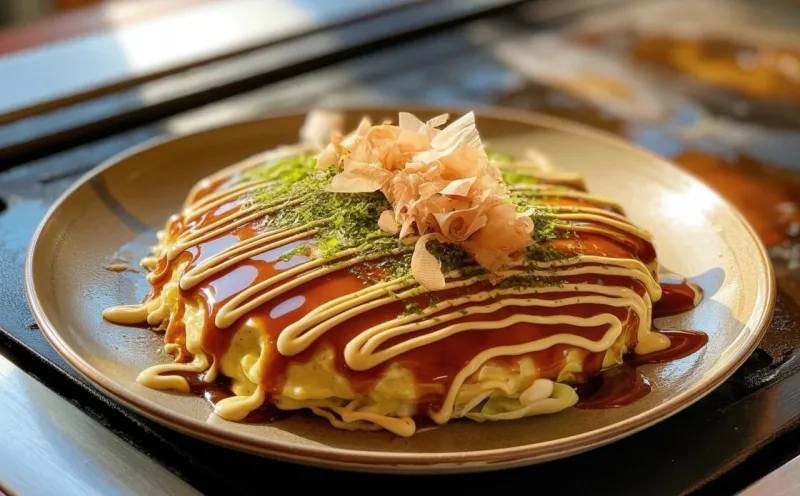
Photo: okonomiyaki sauce bottles on grocery store shelf, via feastrecipe.com
The sauce aisle can feel like a lineup of near-identical brown bottles. For anyone building Hiroshima-style okonomiyaki at home, that is both good news and a small puzzle. Good news because there are more choices than ever in 2026, even outside specialty markets. A puzzle because the label rarely tells you how the sauce will behave on a hot stack of cabbage, noodles, pork, and egg.
This is not a brand ranking. Think of it as a field guide. Grab a bottle, read the clues, taste with intent, and adjust. Hiroshima-style okonomiyaki has a particular architecture, and the sauce has to work with that architecture, not fight it.
Start with what the bottle is actually for
The front label is marketing. The small print is the useful part. Bottles sold as okonomiyaki sauce are usually blended for balance: fruity sweetness, mild acidity, a little salt, and enough body to cling to a finished stack. Tonkatsu sauce leans thicker and sweeter, built for fried pork cutlets. Worcestershire is thinner, sharper, and more vinegar-forward. Yakisoba sauce often sits somewhere in between, with a bit more spice and acidity.
None of these are wrong. They are just different tools. If you are making a Hiroshima-style okonomiyaki with a thin crepe, a tall pile of cabbage, and a noodle layer, you want a sauce that can sit on top without turning the whole thing into a soggy experiment. That usually means moderate viscosity and a sweetness that does not bulldoze the cabbage.
Sweetness is the first dial
Okonomiyaki sauce is not supposed to taste like candy. It should taste like fruit, spice, salt, and a little tang, with sweetness holding it together. American palates often read Japanese brown sauces as sweeter than expected, especially tonkatsu-style bottles. That sweetness can be pleasant on a fried cutlet. On a Hiroshima stack, it can flatten the vegetal crunch of the cabbage and make the noodles feel heavy.
A useful test is to taste the sauce alone, then taste it with a shred of raw cabbage. If the cabbage disappears under sugar, the sauce is probably too sweet for a Hiroshima-style build. You can still use it, but plan to cut it with something sharper. A splash of Worcestershire, rice vinegar, or even a little lemon juice can wake it up.
Viscosity decides the drizzle
Thickness is not a minor detail. A thin sauce soaks into the crepe and pools on the plate. A thick sauce sits on top like ketchup and can overpower the noodle layer. Hiroshima-style okonomiyaki is often sauced at the end, after the stack is flipped and the egg is set. You want a sauce that coats the top, clings to the noodles, and leaves a clean edge rather than a puddle.
At the store, tilt the bottle and watch how the sauce moves. If it slides like Worcestershire, it will need help. If it plops like ketchup, dilute it slightly or use it sparingly. Many okonomiyaki bottles land in the middle, which is why they are the easiest starting point for home cooks.
Acidity keeps the stack from going flat
A little acidity is what makes a rich, porky, cabbage-heavy stack taste bright instead of heavy. Worcestershire brings that sharpness, but it also brings a distinct flavor profile that can read as British pub sauce rather than Japanese griddle sauce. Okonomiyaki sauce usually has a softer acidity, often from vinegar, fruit, or tamarind-style notes. Yakisoba sauce can be a useful bridge when you want more tang and a little spice.
If your finished okonomiyaki tastes muddled, do not reach for more sauce first. Taste the sauce on its own. If it is sweet but flat, a few drops of rice vinegar or lemon can sharpen it. If it is sharp but thin, a spoonful of ketchup or a pinch of brown sugar can round it out.
A five-minute tasting checklist
You do not need a formal panel. You need a small spoon, a white plate, and a piece of cabbage.
- Shake the bottle well. Separation is normal in natural-style sauces.
- Put a small dot on the plate and look at the color. Deep reddish-brown is typical. Very dark sauce may taste more caramelized or salty.
- Smell it. Fruit, spice, vinegar, and salt should all show up. If it smells only sweet, expect a sweeter stack.
- Taste a tiny amount. Then taste it with a shred of raw cabbage. The cabbage test tells you more than the spoon test.
- Tilt the plate. If the sauce runs immediately, it is thin. If it barely moves, it is thick.
- Drizzle a little on a hot piece of cooked cabbage or noodle. Heat changes the aroma. A sauce that tastes sharp cold may soften on the griddle.
Adjustments for Hiroshima-style stacks
Hiroshima-style okonomiyaki has layers, and the sauce should respect them. If your sauce is too thick, thin it with a spoonful of dashi, water, or even a little sake. If it is too thin, simmer a small amount with a dab of ketchup or a pinch of sugar until it coats a spoon. If it is too sweet, add Worcestershire or vinegar a few drops at a time. If it is too sharp, add a little ketchup or mirin.
One home-kitchen trick is to make a small batch of house sauce in a bowl before you cook. Start with half a cup of okonomiyaki sauce, add a teaspoon of Worcestershire, and taste. Adjust from there. This lets you tune the sauce to your stack instead of hoping the bottle is perfect.
Stand-ins and when to use them
Tonkatsu sauce is the easiest stand-in if you already have it. Use it with a splash of Worcestershire to loosen it and sharpen the edges. Worcestershire alone is too thin and too aggressive for most Hiroshima-style stacks, but it is excellent as an adjustment tool. Yakisoba sauce can work when you want a slightly spicier, more acidic finish. If you find a bottle labeled chuno sauce, treat it as a Worcestershire-adjacent all-purpose sauce and taste before committing.
The take-home rule
The best bottle is the one you can adjust. Read the label for purpose, taste for balance, and test for cling. Hiroshima-style okonomiyaki is forgiving, but the sauce is the last thing people taste. Get it close to the griddle-side flavor you remember or want to create, and the rest of the stack has room to shine.