The Quiet Second Pot: Cabbage-Trim Soup for Okonomiyaki Night

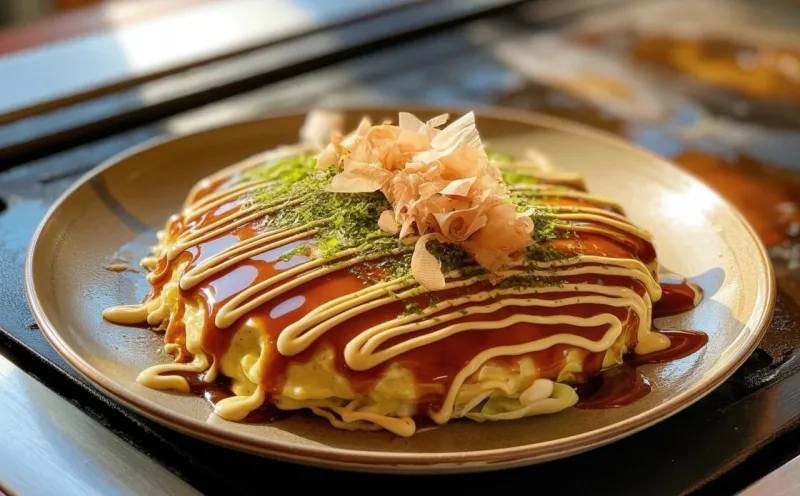
Photo: Silar, CC BY-SA 3.0, via Wikimedia Commons
Okonomiyaki night has a rhythm. Cabbage gets shredded, batter gets ladled, pork and noodles go down, and the griddle starts its slow crackle. Then comes the quieter part: the trim pile. Cores, outer leaves, a few ragged pieces that never made it into the stack. In a lot of American kitchens, that pile goes straight to the bin or the compost bucket. In Hiroshima home cooking, it is often the beginning of something else.
This soup is that something else. It is not another okonomiyaki recipe, and it is not trying to be. It is the second pot on the stove — a light, savory cabbage soup built from the parts of the vegetable that usually get overlooked, plus a little kombu, a few pork trimmings, and a spoonful of miso. It simmers while you cook, and it gives okonomiyaki night a warm first course or a clean, brothy finish.
Why the trim pile deserves a pot
Hiroshima-style okonomiyaki is cabbage-heavy by design. That means a home cook in the US often buys a whole head, uses most of it, and ends up with a bowl of cores and outer leaves that are perfectly good food. The cores are sweet and crunchy. The outer leaves are sturdy and full of flavor. They just need a little more time and a little more liquid than the shredded stuff.
The soup approach is practical for two reasons. First, it uses what you already have. Second, it makes okonomiyaki night feel less like a single-dish project and more like a small meal with a beginning and an end. You are not cooking two complicated things. You are cooking one pancake and letting the trim do a second, easier job.
What goes in — and what stays out
You do not need a long ingredient list. The base is kombu and pork trim, with cabbage doing the heavy lifting. A piece of dried kombu about the size of your palm gives the broth a clean, marine backbone. Pork trim — the ends from a package of sliced pork belly, a few strips of bacon cut into pieces, or the trimmings from a pork shoulder — adds richness without turning the soup heavy. If you keep a bag of pork scraps in the freezer, this is the moment to use it.
Aromatics are flexible: a little ginger, a clove of garlic, the white parts of scallions. White miso is my default because it stays soft and rounded, but red miso works if you want a deeper, saltier edge. Soy sauce is optional. A splash of mirin can help if the broth tastes thin.
What stays out? Anything slimy, wilted, or past its prime. Zero-waste cooking is not a dare. Wash the outer leaves well, trim away bruised spots, and compost the truly tough bits. The soup should taste fresh, not like a cleanup project.
A make-ahead broth that works on a weeknight
The broth is the part you can do ahead. Put a piece of kombu in about six cups of cold water and let it sit while you prep. Bring it to a bare simmer — small bubbles at the edge, not a rolling boil — and hold it there for 15 to 20 minutes. Pull the kombu out before it turns slippery or overly strong. If you are short on time, a good instant dashi packet is a fine shortcut, but the kombu-only version is cleaner and cheaper.
In a separate pot, brown the pork trim in a little neutral oil. You want some color on the meat and a thin film of fat in the pan. Add ginger, garlic, and scallion whites, stir for a minute, then pour in the kombu broth. Add the cabbage cores, sliced thin, and any outer leaves cut into ribbons. Simmer gently for 20 to 25 minutes, until the cores are tender and the broth tastes like cabbage in the best way — sweet, green, and a little savory.
At this point, you can cool the broth and keep it in the refrigerator for up to three days, or freeze it in quart containers. When okonomiyaki night arrives, reheat the broth, add a handful of shredded cabbage from the okonomiyaki prep, and simmer for five minutes. That fresh addition keeps the soup from tasting like leftovers.
The 20-minute assembly
When you are ready to serve, bring the broth back to a gentle simmer. Taste it. Add a spoonful of miso — but do it off the heat. Miso does not need to boil, and keeping it below a simmer preserves its flavor. Stir until it dissolves, then taste again. If it needs salt, add a little more miso or a small splash of soy sauce. If it needs roundness, a pinch of sugar or a splash of mirin will do it.
Add the reserved shredded cabbage and let it soften for a few minutes. If you want the soup to feel more like a meal, add thin slices of pork belly or a handful of cooked yakisoba noodles. A poached egg on top is never a bad idea. Finish with scallion greens and a little shichimi togarashi if you like heat.
Three ways to serve it alongside the griddle
As a starter. Ladle small cups of the broth with just cabbage and scallion while the first okonomiyaki cooks. It gives people something warm to hold and keeps the griddle crowd patient. In a US kitchen, this is especially handy when you are cooking for four or five people and the pancakes come off the griddle one at a time.
As a side bowl. Serve a larger bowl next to the okonomiyaki, with a little pork and noodles in it. The soup cuts through the sauce and mayonnaise on the pancake. It is a good balance for a rich meal, and it makes the table feel more complete without extra frying.
As the next-day lunch. Reheat the broth, add leftover okonomiyaki cut into strips, and let it warm through. The edges soften, the sauce thins into the broth, and you get a savory cabbage noodle soup that tastes like the day after a good griddle night. It is not traditional, but it is practical, and it is very good.
A small note on zero-waste cooking
You do not have to use every scrap to make this worthwhile. The point is to give the trim pile a fair chance before it goes out the door. A head of cabbage bought for okonomiyaki can stretch into two meals: the pancake and the pot. That is the kind of quiet efficiency that fits a weeknight gridle routine, and it keeps the cabbage core from becoming a guilt object in the fridge.
So next time the griddle heats up, put a pot of water on the back burner too. Let the kombu steep, brown the pork ends, and slice the cores while the cabbage for the pancakes sits ready. The soup will be done about when the first okonomiyaki is. It is the second act of the night — softer, brothier, and just as much a part of the meal.