The Crisp-Edge Shortcut: Testing Hiroshima Okonomiyaki in a Countertop Air Fryer
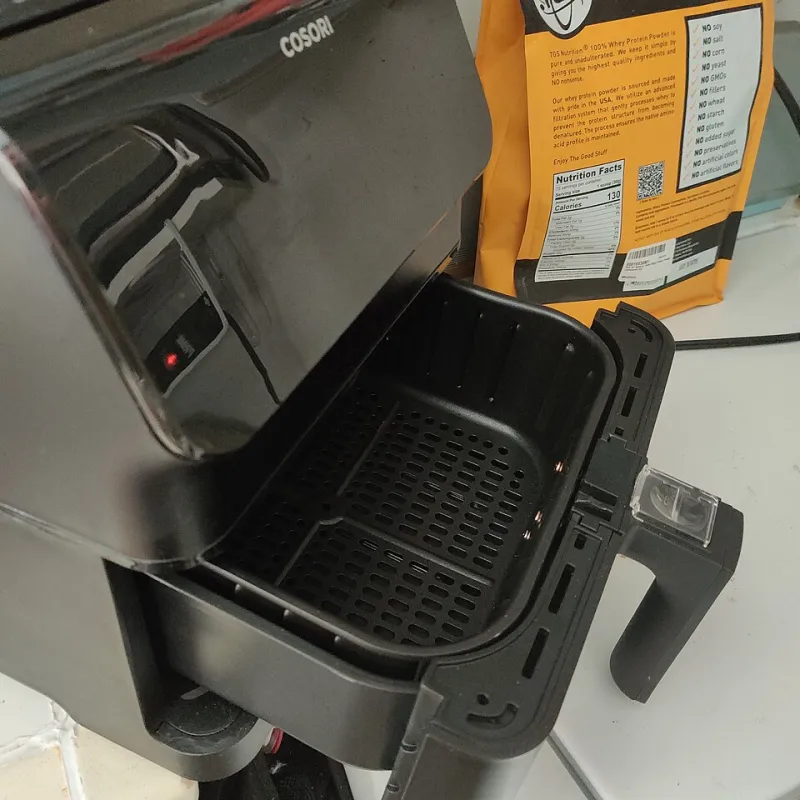
Photo: AirFryerFanatic, CC BY-SA 4.0, via Wikimedia Commons
The air fryer has become the default weeknight appliance in a lot of American kitchens. It sits on the counter, promises crispness, and asks for very little. Hiroshima okonomiyaki, on the other hand, is a stack that wants contact heat: a thin crepe, a mountain of cabbage, bean sprouts, noodles, pork, and egg, all pressed and shuffled across a hot teppan. These two things are not natural allies.
Still, the question is fair. Can a countertop convection oven fake a teppan long enough to get dinner on the table? I tested it in a standard 6-quart basket air fryer, using American cabbage, fresh yakisoba noodles from the refrigerated aisle, and a simple okonomiyaki batter. The short answer: not by itself. The useful answer: a hybrid griddle-to-air-fryer method works, provided you stop treating the appliance like a flat-top.
Why the Air Fryer Struggles With a Layered Pancake
An air fryer moves hot air fast. A teppan moves heat through direct contact. That difference matters when your batter is thin and your cabbage is wet. The fan dries the top of the stack before the center has time to steam, and the basket has no surface to set the bottom. Build a full-size Hiroshima okonomiyaki in a basket and you tend to get leathery edges, a wet middle, and cabbage that is somehow both limp and undercooked.
There is also the flipping problem. Hiroshima-style okonomiyaki is not a loose pancake. It is a layer cake with noodles and pork inside. Flipping it in an air fryer basket is a negotiation with gravity, and the sauce will burn if it goes in too early. The appliance can crisp. It cannot press, seal, or slide under a fragile crepe.
Three Tests, One Clear Winner
I ran three routes with the same basic build: a 6-inch round, about 1 cup of thinly shredded green cabbage, a small handful of bean sprouts, one slice of pork belly or bacon, and a small bundle of par-cooked yakisoba noodles. The batter was 1/2 cup all-purpose flour, 1/4 cup water, one egg, and a pinch of salt. If you keep okonomiyaki flour in the pantry, use it, but this works for a test.
Test 1: All-air-fryer
I built the okonomiyaki on perforated parchment and cooked it at 375°F for 12 minutes. The edges did crisp, but the center stayed damp and the cabbage never fully relaxed. The noodles dried at the tips. It was edible, but it tasted like a shortcut, not a win.
Test 2: Griddle-to-air-fryer
I heated an 8-inch nonstick skillet over medium heat, added a teaspoon of oil, and built the okonomiyaki in the pan. After 3 to 4 minutes, the bottom was set and the stack held together. I slid it onto parchment, moved it to the air fryer basket, and cooked it at 375°F for 7 minutes. This was the winner. The edges crisped, the cabbage cooked through, and the center was tender rather than soggy. The noodles stayed moist because they had already been warmed and lightly sauced.
Test 3: Air-fryer-to-griddle
I started in the basket and finished in the skillet. The bottom crisped, but the cabbage was still crunchy and the whole thing felt pale. Starting in the air fryer does not give the stack enough structure. The griddle needs to go first.
The Hybrid Method That Worked
This is not a full replacement for a teppan, and it is not a dump-and-go air fryer recipe. It is a two-vessel weeknight method. The griddle phase sets the bottom and starts the cabbage steaming. The air fryer phase dries the edges and finishes the center.
- Keep the rounds small. Use 6-inch okonomiyaki, not 10-inch. Two small rounds fit better in a basket and cook more evenly than one large one. A 6-quart air fryer can handle one at a time comfortably.
- Dry the cabbage well. American cabbage holds more surface water than the tight, sweet heads used in Hiroshima. Shred it thin, then pat it dry with a clean towel. Do not salt it ahead of time. You want steam inside the stack, not a puddle in the basket.
- Par-cook the noodles. Toss fresh yakisoba noodles in a skillet with a splash of water and a teaspoon of okonomiyaki sauce for 2 minutes. Keep them warm. Dry noodles will toughen in the air fryer.
- Build and set on the griddle. Heat an 8-inch nonstick or cast-iron skillet over medium. Add a little oil, spread the batter thin, pile on the cabbage and sprouts, add the pork, and drizzle a little batter over the top if needed. Cook for 3 to 4 minutes, until the bottom is golden and the stack holds together.
- Slide, do not flip, into the basket. Use a thin spatula to slide the okonomiyaki onto a piece of air-fryer parchment. Transfer the parchment to the basket. Air fry at 375°F for 6 to 8 minutes, depending on thickness. Do not add sauce yet.
- Finish with sauce and toppings after the air fryer. Brush on okonomiyaki sauce, add mayonnaise, scallions, and bonito flakes once the okonomiyaki is out of the basket. Sauce that goes in early will scorch and turn bitter.
Adjustments for American Counters and Cabinets
A few small changes make the method more reliable. If your batter seems runny, add another tablespoon of flour. The air fryer fan is less forgiving of a wet batter than a hot griddle. If you use bacon instead of pork belly, choose a thicker cut so it does not burn before the cabbage is done. Keep the basket uncrowded. One 6-inch okonomiyaki at a time is slower, but it is better than a stack of soggy rounds.
For the egg layer, cook the egg separately in the skillet and slide it onto the finished okonomiyaki. An egg added raw to the air fryer basket will set unevenly and can glue the parchment to the stack. This is one place where a separate pan is worth the extra minute.
Leftovers reheat well at 350°F for 4 minutes. That may be the air fryer’s best contribution to Hiroshima okonomiyaki: a crisp second act on Wednesday.
What Still Belongs on the Griddle
A full-size Hiroshima okonomiyaki, a party batch, a sauce charred against hot steel, noodles pressed until their edges crackle: those still belong on a griddle. The air fryer is a weeknight shortcut, not a teppan. But if the choice is between skipping okonomiyaki on a Tuesday and running a hybrid batch through the basket, the hybrid earns its counter space. Start on the skillet, finish in the air fryer, and sauce at the end. That is the version that actually works.