The Chewy Layer: Rethinking the Noodle in Hiroshima-Style Okonomiyaki
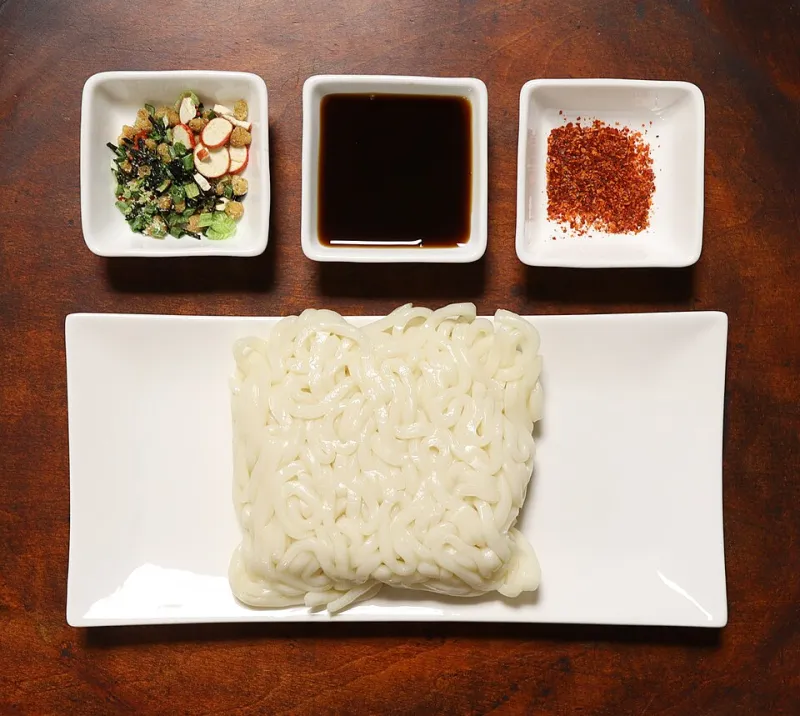
Photo: Mobius6, CC BY-SA 4.0, via Wikimedia Commons
Most American home cooks meet Hiroshima-style okonomiyaki with a bag of soba. It makes sense: soba is the default in many restaurant versions, and its nutty flavor signals that this is not the Osaka-style pancake people may know. But udon belongs in the conversation, too. The thick wheat noodle changes the texture of the stack in a good way, especially on a weeknight when you want something sturdy, chewy, and a little more forgiving than delicate soba.
The key is not to treat udon as a simple swap. Hiroshima okonomiyaki is built in layers: a thin crepe, a heap of cabbage, bean sprouts, pork, noodles, and usually an egg. Every layer manages moisture. Udon is thicker and denser than soba, so it can either protect the crepe from a wet cabbage layer or turn the whole thing heavy if you handle it carelessly. A few small adjustments make udon feel intentional rather than improvised.
Why Udon Changes the Stack
Soba brings a toasted, slightly fragile quality. It can crisp against the griddle and clump if it sits too long. Udon is chewier, more substantial, and better at holding a glossy coat of okonomiyaki sauce. That makes it a strong choice when you want a forkful that feels almost like a noodle dish tucked inside a crepe.
Udon also has a practical advantage in an American kitchen: it is easy to find. Frozen sanuki-style udon is common in the freezer aisle of Asian groceries and many mainstream supermarkets. Vacuum-packed udon sits in the refrigerated section, and dried udon is usually nearby in the pasta or international aisle. None of these are identical, but all can work if you par-cook them with the stack in mind.
The trade-off is weight. Udon releases less water than cabbage, but it can still steam the center of the crepe if it goes on wet. Drain it well, keep it in a loose nest rather than a tight blanket, and let the edges of the crepe stay exposed. That is how you get the contrast Hiroshima okonomiyaki needs: crisp rim, soft middle, chewy noodles.
The Par-Cook Rule
Do not cook udon all the way to package directions before it goes on the griddle. It will finish cooking in the stack, and overcooked udon turns flabby. The goal is flexible, separated noodles that are still a little firm.
For frozen udon, drop the noodles into boiling water for 60 to 90 seconds, just until they separate. Drain immediately and spread them on a plate to cool. For vacuum-packed udon, rinse under hot running water to loosen the strands, then drain and pat dry. For dried udon, boil for 2 to 3 minutes less than the package suggests, then rinse and drain thoroughly.
A light toss with a teaspoon of oil can keep udon from sticking to itself, but do not sauce the noodles before they hit the griddle. Sauce early and they will scorch. Save the okonomiyaki sauce for the finished stack, or brush it on at the very end.
Weeknight Ratio Chart
For two 8-inch Hiroshima-style okonomiyaki, this is a reliable starting point. Adjust by appetite, but keep the cabbage-to-noodle balance in mind: too much udon and the stack becomes dense; too little and the noodle layer disappears.
| Noodle type | Amount for two stacks | Par-cook cue | Drain and dry |
|---|---|---|---|
| Frozen udon | About 14 oz (two individual portions) | 60 to 90 seconds in boiling water | Spread on a plate, cool 5 minutes |
| Vacuum-packed udon | Two 7-oz packs | Rinse under hot water until strands separate | Pat with clean towel |
| Dried udon | About 3.5 oz dry | Boil 2 to 3 minutes under package time | Rinse, drain well, toss with 1 tsp oil |
Pair that with about 10 oz shredded green cabbage, 2 thin pork cutlets or 4 thin slices, 2 eggs, and roughly 1 cup of thin okonomiyaki batter. That ratio keeps the udon as a layer, not the main event.
Layering So the Crepe Stays Crisp
Build the okonomiyaki in the order that protects the crepe. Ladle a thin circle of batter onto a hot, lightly oiled griddle. Immediately pile on the cabbage and bean sprouts. Lay the pork on top. Then add the drained udon in a loose nest, leaving a half-inch border around the edge. Do not press the noodles flat.
When the cabbage begins to soften and the bottom of the crepe is set, use two spatulas to flip the stack. If you are adding an egg, crack it onto the griddle first and flip the okonomiyaki onto the egg. Let it cook until the egg is set and the noodles are hot. Brush with sauce at the table or just before serving. A thin swipe of mayonnaise is optional, but keep it light so the udon does not turn pasty.
A Side-by-Side Texture Test
To see the difference clearly, make two small okonomiyaki with the same batter, cabbage, and pork. Use soba for one and par-cooked udon for the other. The soba version tends to crisp more at the edges and has a drier, toastier finish. The udon version is chewier through the center, with sauce clinging to the thick noodles and a slightly softer bite. Soba can feel more delicate; udon feels more like a meal.
Neither is better in every situation. If you want crackly edges and a lighter stack, choose soba. If you want a hearty weeknight dinner, something that holds up for leftovers, or a noodle layer that kids can twirl without it falling apart, udon is the practical pick.
A Short US Supermarket Shortlist
Look for frozen sanuki udon first. Its springy texture is closest to what you want. Vacuum-packed udon is the next best convenience option, but rinse off the starchy liquid before using it. Dried udon works, though it needs more careful draining and a lighter hand with sauce. Avoid fresh udon packs that come with a seasoning packet; you want plain noodles, not a second sauce layer.
At home, udon is not a compromise. It is a different way to build the stack, one that keeps the Hiroshima-style layering intact while giving the weeknight griddle a chewier, more forgiving noodle layer.